Saturday, November 12, 2022

1) Police arrest 7 students for flying Morning Star flag at campus rally in Abepura


2) How did Dag Hammarskjöld die? The CIA and Indonesian connection 
3) Mahfud MD sanguine about continued improvement in Papuans' welfare  

---------------------------------------
http://www.indoleft.org/news/2022-11-10/police-arrest-7-students-for-flying-morning-star-flag-at-campus-rally-in-abepura.html

1) Police arrest 7 students for flying Morning Star flag at campus rally in Abepura
Tribune Papua – November 10, 2022


Papuan students hold Morning Star flags on grouds of USTJ campus – November 10, 2022 (Istimewa

Aldi Bimantara, Jayapura – A protest action in which Morning Star independence flags were flown by a group of students on the Jayapura Science and Technology University (USTJ) campus in Abepura has ended with seven students being arrested by police.

Speaking by telephone with Tribune Papua on Thursday November 10, action coordinator Kaitanus Ikinia confirmed the rally and subsequent arrests.

"The demonstration earlier on the USTJ campus involved seven students and the agenda was still the same, rejecting the dialoged between Jakarta and Papua initiated by the Komnas HAM [National Human Rights Commission]", he said.

In his explanation, Ikinia said that the seven students who held the action and were then arrested were Ernesto Matuan, Devio B Tekege, Ambrosius Elopere, Eko Ukago, Nobertus Dogopia, Matius Mabel and Andy You.

In addition to this, Ikinia said that the action was part of the commemoration of 22 years since the death of Papua independence figure Theys Hiyo Eluay.

"The protesters were giving speeches on campus conveying their aspirations and the police entered the USTJ campus grounds where the demonstration was and without any coordination, straight away forcibly broke it up", he explained.

Ikinia admitted that it was indeed true that there were students who brought two Morning Star flags to the demonstration.

"The students who took part in the demonstration at the USTJ campus were more than seven people, but as soon as the police arrived the others ran out because they were chased, until there was a sound of teargas being fired", he explained.

Ikinia added that as a result of the arrests it has increased tension on the USTJ campus.

Meanwhile during the peaceful demonstration the students made five demands which had to be implemented and followed up on.

First, they asked for an acknowledgment from all parties to commemorate November 10 as a national Papuan hero's day.

Second, they oppose the state forcing the Papuan people to accept new autonomous regions (DOB) and the creation of three new provinces in Papua which were claimed unilaterally and only supported by certain rogue Papuan figures.

Third, they explicitly reject efforts by the state through Komnas HAM to conduct a dialogue because it is truly impossible for perpetrators to try perpetrators.

Specifically in the third point, they said that it is impossible for the dialogue to be fair because Papua is not a national but an international issue, so a resolution must be implemented through international mechanisms.

Fourth, they explicitly reject the involvement of rogue Papuan figures in the Indonesian initiated dialogue through Komnas HAM.

Fifth, they called on the state and the United Nations to officially acknowledge the right of self-determination for West Papua.

As of this article being published, Ikinia said that the arrested students were still being questioned at the Abepura sectoral police offices. (*)

Notes

West Papuan pro-independence leader Theys Hiyo Eluay was found dead in his car in November 2001 after attending a party thrown by the Indonesian Army's Special Forces (Kopassus). Seven Kopassus soldiers were subsequently tried and found guilty of his murder and sentenced to short prison terms.

Recent efforts by the government's National Human Rights Commission (Komnas HAM) to hold a dialogue with the Free Papua Movement (OPM) have been criticised for allegedly involving Papuan rebel groups cultivated by the TNI (Indonesian military). The effort has also been seen by many as a cynical attempt to counter mounting international criticism over ongoing rights abuses in Papua.

[Translated by James Balowski. The original title of the article was "Polisi Amankan Mahasiswa Kibarkan Bendera Bintang Kejora saat Demo di Kampus USTJ Jayapura".]

Source: https://papua.tribunnews.com/2022/11/10/polisi-amankan-mahasiswakibarkan-bendera-bintang-kejora-saat-demo-di-kampus-ustj-jayapura

————————————————

https://johnmenadue.com/how-did-dag-hammarskjold-die-the-cia-and-indonesian-connection/


2) How did Dag Hammarskjöld die? The CIA and Indonesian connection 
By Duncan Graham Nov 12, 2022

More than six decades after his plane crashed it remains the great Cold War mystery: Was UN secretary-general (1953-61) Dag Hammarskjöld killed by sabotage, a technical fault, pilot error or air attack? If he was assassinated who was the mastermind?

Dr Greg Poulgrain, who teaches Indonesian history at the University of the Sunshine Coast, suggests the Swedish peacemaker was killed under directions from the US Central Intelligence Agency’s hard-right director Allen Dulles (1893-1969).

The Australian academic’s theory has been given weight by the little-noted release in August of a UN investigation into the death of Hammarskjöld and the 15 passengers and crew on 18 September 1961.

The chartered Douglas DC-6 started from Leopoldville (now Kinshasa) where it had been parked unattended.

It was heading to cease-fire negotiations in Ndola between UN forces and local militia when it smashed into a forest in Zambia (then Rhodesia) during the landing approach.

The 100-page UN report recommends further disclosures from governments, including the US and UK which allegedly hold unreleased air traffic records. Poulgrain suggests the altimeter records be re-checked and technicians traced.

The UN investigation led by former Tanzania Chief Justice Mohamed Chande Othman, was initiated by new info about the tragedy.

A 2019 Danish documentary Cold Case Hammarskjöld suggested the DC-6 was harassed by a small fighter plane during descent, though it seems no bullet holes were found in the wreckage.

Researchers on the film told Othman of documents from the South African Institute for Maritime Research. Despite the benign title, it claimed this was a pro-apartheid clandestine militia linked to a foreign intelligence agency,

This information surfaced apparently by chance during South Africa’s 1998 Truth and Reconciliation Commission hearings. Chairman Archbishop Desmond Tutu released a folder from the National Intelligence Agency.

Inside were letters referring to a plan to assassinate Hammarskjöld and involving Dulles. It was called Operation Celeste (heavenly, as in celestial).

Othman never saw the originals so they haven’t been authenticated. This is despite several requests to SA authorities.

The UN inquiry’s other source is Poulgrain’s 2020 book JFK vs. Allen Dulles: Battleground Indonesia.

The author interviewed two UN officials, the Irish intellectual and politician Conor Cruise O’Brien, and Australian diplomat George Ivan Smith, ‘Hammarskjöld’s right-hand man’.

They claimed the Secretary-General had been intentionally killed. Smith asserted there were two CIA planes on the Ndola tarmac waiting for Hammarskjöld’s flight, one full of communications gear, though it’s unclear what this implies.

Poulgrain also cited 14 inquiries on US intelligence activities led by US Democrat Senator Frank Church (1924-84). Some referred to Operation Celeste and this extract:

‘UNO is becoming troublesome and it is felt that Hammarskjöld should be removed. Allen Dulles agrees and has promised full cooperation from his people.’

Most theories about the plane crash involve hostility to Hammarskjöld’s mediation efforts during the Congo civil war (1960-65) following the new nation’s liberation from Belgium.

Poulgrain links the alleged assassination to Indonesia. He says Smith revealed that before heading to the Congo, Hammarskjöld had been focused on the sovereignty of West New Guinea.

The Indonesian Republic under first President Soekarno wanted to seize the resource-rich western half of the island of New Guinea, then Dutch territory.

The dispute was eventually resolved in 1969 through a referendum (‘An Act of Free Choice’). The Indonesian military selected 1,025 village chiefs who voted to join the Republic.

Poulgrain suggests that Dulles as head of the CIA wanted Hammarskjöld removed because he favoured ‘the independence of the Papuan people.’

His policy was supported by President John Kennedy but opposed by Dulles who was also involved with a company that had discovered massive gold deposits in West Papua, now the Grasberg mine.

Dulles was a heavy-duty anti-Communist Republican who specialized in forceful regime changes. Under his rule, the CIA engineered coups in Iran and Guatemala and failed assassination attempts against Cuba’s Fidel Castro.

A US Senate investigation found Dulles responsible for the death of Congo PM Patrice Lumumba in the same year Hammarskjöld died.

The disastrous 1961 Bay of Pigs invasion of Cuba by CIA-funded Cuban exiles led to Dulles forced resignation.

Hammarskjöld was the opposite, a poet and philosopher as well as a diplomat. He was posthumously awarded the Nobel Peace Prize.

London University researcher Dr Susan Williams, author of Who killed Hammarskjöld? called him ‘a courageous and complex idealist, who sought to shield the newly-independent nations of the world from the predatory instincts of the Great Powers’.

After the Swede’s death Kennedy commented: ‘I realise now that in comparison to him, I am a small man. He was the greatest statesman of our century.’

Former Democrat President Harry Truman told a journalist Hammarskjöld ‘was on the point of getting something done when they killed him. Notice that I said ‘when they killed him’.’ He would not elaborate.

A clearly frustrated Othman thinks the truth has still to be found. His report urges the UN to continue pushing its members to release info he sought:

‘The passage of time has not reduced the significance of this matter to the families of the victims of flight SE-BDY, who died serving the noble aims of the UN.

‘Nor has it become less important for the organisation itself that a true accounting of history be made.

‘My assessment remains that it is of the highest probability that specific and important information exists, but that it has not been disclosed by a small number of member states.’

The Danish doco Cold Case Hammarskjöld starts with the statement: ‘This could be the world’s biggest murder mystery – or the world’s most idiotic conspiracy theory’.

That was written before Donald Trump claimed his 2020 election loss was a fraud. Either way the case stays open.


Duncan Graham has been a journalist for more than 40 years in print, radio and TV. He is the author of People Next Door (UWA Press) and winner of the Walkley Award and Human Rights awards. He is now writing for the English language media in Indonesia from within Indonesia.

----------------------------------

https://en.antaranews.com/news/259885/mahfud-md-sanguine-about-continued-improvement-in-papuans-welfare

3) Mahfud MD sanguine about continued improvement in Papuans' welfare  
48 minutes ago

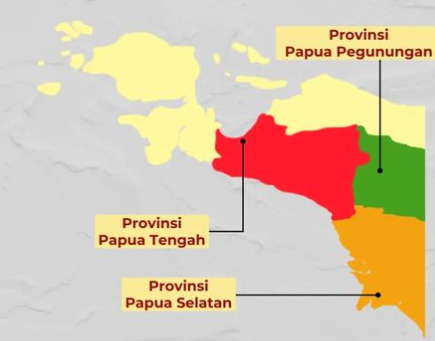
Jakarta (ANTARA) - Indonesia's chief security minister Mahfud MD is upbeat about Papuans' security and welfare continuing to get better following the inauguration of new autonomous provinces of South Papua, Papua Pegunungan, and Central Papua on Friday.

Three acting governors officially took their oaths of office to commence their works at the new provinces during an inauguration ceremony taking place at the Home Ministry building in Central Jakarta.

"Congratulation to the best Papuan figures who are, today, sworn in as the acting governor of Papua Pegunungan Province, Papua Tengah Province, and Papua Selatan Province," Mahfud MD tweeted on his Twitter account.

The coordinating minister for political, legal, and security affairs tweeted his congratulatory messages to Apolo Safanpo, acting Papua Selatan governor; Nikolaus Kondomo, acting Papua Pegunungan governor; and Ribka Haluk, acting Papua Tengah governor, on the sidelines of his participation in the ASEAN Leaders Summit in Cambodia on Friday.

Home Minister Muhammad Tito Karnavian inaugurated the three acting governors on behalf of President Joko Widodo with the hopes that they would make utmost efforts to work well.

The inauguration of the three new autonomous provinces has increased the count of Indonesian provinces on the Island of New Guinea to five.

Two other Indonesian provinces -- Papua and West Papua -- have existed earlier on the western part of the island. Those Indonesian provinces share land and sea borders with Papua New Guinea.

The inauguration ceremony, which took place at the Home Ministry building in Central Jakarta, was marked by the beats of Tifa drums beaten by Karnavian and his deputy, John Wempi Wetipo, and two government officials.

"This Friday, November 11, 2022, on behalf of the Indonesian president, I, as the home minister, inaugurate South Papua Province based on Law No.14 of 2022, Central Papua Province based on Law No.15 of 2022, and Papua Pegunungan Province based on Law No.16 of 2022," Karnavian remarked. 
Following the House of Representatives' (DPR's) enactment of the three laws on June 30, 2022, President Joko Widodo (Jokowi) validated those three new autonomous provinces on July 25, 2022.

The laws stipulate that President Jokowi must appoint acting governors within six months after the enactment of the laws. They will be in power until regional elections are held to elect the definitive pairs of governor and deputy governor.

Soon after their inauguration, the acting governors would commence their administrative works. The laws also mandate them to facilitate the formation of the Papuan People's Assembly (MRP) and Papua People's Representatives' Council (DPRP).

The laws also mandate them to facilitate the convening of regional elections for electing the definitive pairs of governor and deputy governor as well as to manage their respective provinces' budgets.

Home Minister Tito Karnavian said the three new provinces in Papua would further bring positive impacts on the lives of people as shown by the earlier experience of regional division to create West Papua Province.

West Papua has clocked swift development in terms of bureaucracy, issuance of permits, public services, and the handling of other administrative matters, he added.

Related news: Home minister inaugurates acting governors of new provinces in Papua
Related news: Six villages in West Papua getting round-the-clock power: official
Related news: Indonesian home minister inaugurates three new provinces in Papua


Reporter: Syaiful H, Rahmad Nasution
Editor: Sri Haryati

----------------------

Friday, November 11, 2022

1) Rights activists slam Indonesia’s ‘baseless’ claims at UN


2) Indonesia now officially has 37 provinces as 3 new Papua autonomous regions inaugurated
----------------------------

https://www.ucanews.com/news/rights-activists-slam-indonesias-baseless-claims-at-un/99396

1) Rights activists slam Indonesia’s ‘baseless’ claims at UN

Minister tells UN rights body all cases of rights violations including those in restive Papua are investigated properly

 By UCA News reporter Published: November 11, 2022 11:58 AM GMT

Rights activists have criticized the Indonesian government for what they call baseless claims on rights issues at the UN Human Rights Council, including those related to the handling of the conflict in the Papua region.

Activists said various claims by the government in the 4th round of the Universal Periodic Review (UPR) session in Geneva on Nov. 9 are "contrary to the actual situation, which has also been reported by Indonesian civil society through an alternative report sent in March 2022."

In the UPR session, Indonesia was represented by the Minister of Law and Human Rights, Yasonna H. Laoly.

Laoly claimed that the government always cooperates with human rights defenders, civil society organizations, journalists, and other civil elements to ensure the protection of human rights.

While on the issue of impunity, the government emphasized the provision of reparations for victims and that non-judicial mechanisms were complementary to judicial mechanisms and promised to properly investigate past gross human rights violations.

The same applies to the issue of human rights in Papua, where he said that most cases of violence in Papua have been investigated and the perpetrators have been punished.

Nurina Savitri, campaign manager for Amnesty International Indonesia stated that the government "did not provide complete information on the human rights situation" in Indonesia.

Regarding the Papua issue, she said, “the reality is that there are no cases involving security forces in Papua, including extrajudicial killings, which have previously been successfully investigated and tried in an independent court. "

“In the report, the government only conveys the situation in Papua from the perspective of infrastructure development, and welfare, even though at the same time violence continues. Of course, it is unfair to answer all this violence only with the jargon of infrastructure development," she said in a statement.

She also highlighted the repeated violations of the Papuan people's right to freedom of expression and peaceful assembly, as well as the government's tendency to strengthen its security approach.

“The Indonesian government states that the international community must be able to distinguish between human rights issues in Papua and legal enforcement actions. The question is, has the Indonesian government been able to tell the difference?” Nurina said.

"Extrajudicial killings, silencing of expression, against Papuan civil society is not an act of law enforcement, it is a clear violation of human rights," she added.

Yuli Langowuyo, executive director of the Franciscan's Secretariat for Justice, Peace and Integrity of Creation in Jayapura Diocese of Papua, said, “the Indonesian government needs to seriously make efforts to fulfill human rights, including freedom of expression in the context of Indonesia and Papua.

For example, she highlighted the current revised draft of the Criminal Code which still includes an article on asking for permission to hold demonstrations.

“This is against the spirit of democracy in Indonesia and will be increasingly repressive. Moreover, in Papua, the number of violence due to restrictions on the right to free expression can increase," she told UCA News on Nov. 11.

She also highlighted the government's claims related to many infrastructure developments which are presented as means to assist Papua but do not address the political status of Papua within Indonesia.

She said the situation in Papua was mentioned by approximately nine countries in the UPR session for Indonesia.

"This means that the eyes of the international community are not closed to see the situation of injustice in Papua," she said.

Papua is a former Dutch colony that declared independence in 1961. However, Indonesia annexed the territory through a referendum widely considered a sham.

A separatist movement for independence was born, prompting Indonesia to maintain a heavy military presence in the resource-rich but underdeveloped province.

This year 51 people were arrested and subjected to violence related to peaceful demonstrations, according to Amnesty International Indonesia. It reported that 95 civilians in Papua were victims of extrajudicial killings in 2018-2021.
———————————
2) Indonesia now officially has 37 provinces as 3 new Papua autonomous regions inaugurated
By Coconuts Jakarta Nov 11, 2022 | 3:29pm Jakarta time

A map showing the three new provinces in Papua. Photo: Cabinet Secretariat

The Ministry of Home Affairs today inaugurated three new autonomous regions that formerly formed part of Papua province, raising the number of Indonesian provinces to 37.

Central Papua (Papua Tengah), Highland Papua (Papua Pegunungan), and South Papua (Papua Selatan) now join Papua and West Papua as the five provinces occupying the Indonesian half of New Guinea island.

Legislation for the three new autonomous administrative regions, aimed at improving governance and public services, was ratified by parliament in late June, after which wheels were set in motion for their formation.

Today, Home Affairs Minister Tito Karnavian appointed Apolo Safanpo as South Papua governor, Ribka Haluk as Central Papua governor, and Nikolaus Kondomo as Highland Papua governor. All three are serving in interim capacity until elections can be held in 2024.

“Today, on November 11, 2022, I, Tito Karnavian, as home affairs minister representing the president of the Republic of Indonesia, inaugurated the provinces of South Papua, Central Papua, and Highland Papua,” Tito said in the inauguration ceremony in Jakarta.

The formation of the three new provinces has not entirely been a cause for celebration, particularly for indigenous communities and secessionists on the island. Many see the move as a ploy by Jakarta to further divide the region and impose tighter control over the Papuan people and the resource-rich island.

Papua was a Dutch colony until the early 1960s, when it declared itself an independent nation in 1961. Neighboring Indonesia took control of the region by force in 1963 and officially annexed it with a UN-backed referendum in 1969 that was widely seen as a sham.

------------------------

Thursday, November 10, 2022

1) Indonesia faces the music at UN human rights review


2) West Papuans urged to get vaccinated as COVID-19 infections increase

3) Military Police examines 8 soldiers in Keerom child abuse case 

-----------------------------------


1) Indonesia faces the music at UN human rights review  

Speaking out: 'Silenced' by Yanto Gombo depicts the difficulty Papuans face in speaking out against oppression. (Courtesy of the Organizing Committee Biennale Jogja XVI Equator #6 2021)(Personal collection/Courtesy of the Organizing Commitee Biennale Jogja XVI Equator #6 2021)


A. Muh. Ibnu Aqil (The Jakarta Post)
 PREMIUM Jakarta   ●   Thu, November 10, 2022 

Indonesia was put on the defensive at a United Nations human rights review on Wednesday as countries spotlighted persistent political violence in Papua and anti-lesbian, gay, bisexual, transgender and queer (LGBTQ) policies, among other issues.

 In its national report for the UN Human Rights Council’s (HRC) 41st Universal Periodic Review, Indonesia highlighted its achievements in protecting human rights amid the COVID-19 pandemic, enacting pro-human rights legislation and supporting minority groups. 

The countries conducting the review at the UN headquarters in Geneva raised concerns about rights violations in Papua, citing reports of escalating violence, extrajudicial killings, enforced disappearances and restrictions on independent observers and the press. 

They recommended that Jakarta accept a visit of the Office of the High Commissioner for Human Rights to Papua and conduct investigations into extrajudicial killings and human rights violations in the restive region.

 In response, the Foreign Ministry’s director for human rights, Achsanul Habib, asserted that Papua was an integral part of Indonesia according to international law and that the region faced security challenges from “armed separatist groups”. “Critical infrastructure, human development, peace and security continue to be undermined by terrorist acts committed by these groups, who have intensified attacks against civilians and critical infrastructure since 2018,” Habib said on Wednesday, as broadcast by UN Web TV. 

Meanwhile, Law and Human Rights Minister Yasonna Laoly said President Joko “Jokowi” Widodo’s administration had prioritized accelerating development and welfare in Papua. 

Some countries recommended that Indonesia take steps to abolish the death penalty by placing a moratorium on state executions and by commuting the sentences of people on death row. 

They also encouraged the country to ratify the Second Optional Protocol to the International Covenant on Civil and Political Rights. Minister Yasonna said the government had responded that the death penalty was still the law of the land and that debates in the executive and legislature had shown that most were in favor of keeping it.

 He noted that revisions to the Criminal Code under discussion in the legislature would introduce a “middle way” in which the death penalty would serve as an “alternative punishment” that could be commuted to life in prison following an evaluation 10 years after sentencing. 

“We hope that with this middle way, our approach to the issue of the death penalty can be accepted by international society,” Yasonna said during an online press conference streamed from Geneva on Wednesday. 

Several countries also raised concerns over “negative developments” for the LGBTQ community and recommended that Indonesia revise laws that enshrined discrimination on the basis of sexual orientation or gender identity. 

The UN review session, Indonesia’s fourth, also highlighted the country’s human rights achievements, citing the enactment of the 2022 Sexual Violence Law and the 2019 revision of the Marriage Law, which raised the minimum marrying age for women to 19 years old, equal to men. 

Human Rights Watch researcher Andreas Harsono said Indonesia had been “defensive” in response to concerns raised over Papua and had argued that armed resistance was nothing new in the region, as it had been going on since the 1960s. “That should not legitimize closing Papua off by making it harder for UN observers to visit,” Andreas told The Jakarta Post on Thursday. 

He added that Indonesia’s measures against armed resistance in Papua had been “excessive” and that the division of the area into five provinces would create new problems instead of settling them. Andreas also said the government’s reasoning for keeping death penalty was “unsatisfactory”. “However, the fact that giving out the death penalty would be harder [under the revised Criminal Code] is still a step forward. 

It’s not enough, but at least there is an awareness that law enforcement can make mistakes,” he said. Meanwhile, a group of civil society organizations urged the government to accept and follow up on all the recommendations it had received during the human rights review session. 

“The [review] session is an evaluation of accountability of Indonesia’s human rights commitments. This mechanism should not become a tool for Indonesia to create an image that Indonesia has been human rights friendly,” the group said in a statement.
————————————


2) West Papuans urged to get vaccinated as COVID-19 infections increase

Manokwari, W Papua (ANTARA) - West Papua's administration appealed to residents to get booster shots and implement the government's health protocols, as the number of COVID-19 cases in the province continues to increase amid the emergence of the XBB sub-variant.

"On Wednesday, 16 new cases of COVID-19 infections (were reported, thereby) bringing the total number of cases in West Papua Province to increase to 105," West Papua's COVID-19 Task Force spokesperson, Arnold Tiniap, stated.

The number of COVID-19 cases have, so far, been found in 11 districts and cities, except for the districts of South Sorong and Arfak, he noted in a statement on Thursday.

Significant number of COVID-19 cases had been detected in Sorong City reaching 20, as well as in the districts of Manokwari, Teluk Bintuni, and Raja Ampat, with 21, 18, and 17 cases respectively, he stated.


Related news: Vaccinate without further ado as COVID-19 cases spike: Health Ministry


As part of preventive measures, Tiniap said personnel of the COVID-19 task force and related government agencies continue to encourage locals to get vaccinated and comply with the health protocols.

The spread of the XBB sub-variant of COVID-19 has been confirmed in several Indonesian provinces, and its transmission level could likely be faster than that of the Omicron sub-variant, he noted.

"Thus, if the positivity rate increases significantly, whole genome sequencing needs to be conducted to know exactly the spread of the XBB sub-variant in the province," he added.

Coronavirus infections initially surfaced in the Chinese city of Wuhan at the end of 2019. Since then, they have spread to over 215 countries and territories, including Indonesia.

Related news: Indonesians advised vigilance as COVID shadow looms again


The Indonesian government officially confirmed the country's first cases on March 2, 2020. To tackle the spread of COVID-19, the government launched a national vaccination program on January 13, 2021.

Currently, several countries are striving to cope with the spread of the XBB sub-variant.

The Indonesian Health Ministry's spokesperson, Mohammad Syahril, said recently that the XBB sub-variant has been detected in 28 countries.

In Indonesia, the ministry has recorded at least 12 cases of the XBB and XBB.1 Omicron sub-variants, including two cases from overseas travelers arriving from Singapore, he said.


Related news: New sub-variants triggering COVID spike: minister

Related news: Wage subsidy reaches 10.3 mln workers: minister


Reporter: HA Kapisa, Rahmad Nasution
Editor: Fardah Assegaf


---------------------------------

https://en.jubi.id/military-police-examines-8-soldiers-in-keerom-child-abuse-case/

3) Military Police examines 8 soldiers in Keerom child abuse case   

News Desk - Military Violence Against Papuan Children 

10 November 2022 


Jayapura, Jubi – Head of Information of the XVII/Cenderawasih Military Regional Command (Kodam) Col. Cav. Herman Taryaman said the Kodam’s Military Police (Pomdam) had listed 32 Indonesian Military (TNI) soldiers to be questioned on the alleged persecution of three children in Keerom Regency. However, of the 32 names, only eight people have actually undergone an examination.

This was stated by Herman to reporters at the Information Office of Kodam XVII/Cenderawasih on Tuesday, November 1, 2022.

“Pomdam XVII/Cenderawasih is still conducting the investigation,” Herman said.

Pomdam XVII/Cenderawasih has examined eight soldiers, and 24 others will soon be summoned and examined.

“The rest will be continuously summoned in the coming days for questioning,” he said.

Rahmat Paisei (15), Bastian Bate (13), and Laurents Kaung (11) were allegedly tortured at the Cartenz Task Force Post, in Yuwanain Village, Arso District on October 27, 2022. All three were abused by the soldiers using chains, coils of wire and water hoses they suffered injuries and had to undergo treatment at the hospital.

Herman said Pomdam is coordinating with the Cartenz Peace Task Force to expedite the legal process of the case. (*)

-----------------

Wednesday, November 9, 2022

Child persecution in Keerom allegedly done by dozen soldiers: Komnas HAM Papua

 https://en.jubi.id/child-persecution-in-keerom-allegedly-done-by-dozen-soldiers-komnas-ham-papua/


Child persecution in Keerom allegedly done by dozen soldiers: Komnas HAM Papua   
News Desk - Military Violence Against Papuan Children
 9 November 2022


Jayapura, Jubi – Head of the Papua Office of the National Commission on Human Rights (Komnas HAM Papua) Frits Ramandey on Tuesday, November 8, 2022, announced the results of the commission’s investigation into the persecution of three children in Keerom Regency. Komnas HAM Papua suspected the persecution was carried out by dozen of Indonesian Military (TNI) soldiers.

The investigation was conducted on October 29 and 30. “Based on the testimony of the three children victims, they were tortured by dozen of soldiers. They could not detail the number,” Ramandey said in Jayapura City, Tuesday.

Rahmat Paisei (15), Bastian Bate (13), and Laurents Kaung (11) were allegedly tortured at the Cartenz Task Force Post, in Yuwanain Village, Arso District on October 27, 2022. All three were abused by the soldiers using chains, coils of wire and water hoses they suffered injuries and had to undergo treatment at the hospital.

Ramandey said Komnas HAM Papua received a complaint from Rahmat’s parents, Jon Paisei, on October 28.

According to Ramandey, at first, two cockatoos disappeared from the Cartenz Task Force Post guarded by the Army’s Special Forces (Kopassus). The day after the birds’ disappearance, Laurents Kaung came to the post and offered a lory to the Kopassus soldiers. The lory Laurents was selling was allegedly stolen from elsewhere.

The soldiers detained Laurents and asked him about the origin of the lory. Laurents mentioned two other names, Rahmat Paisei and Bastian Bate. “After that, the soldiers detained the three of them and tortured them,” Ramandey said.

Ramandey said Rahmat Paisei was beaten by Kopassus soldiers at 7 a.m., and then sent home battered.  At around 7 p.m., Rahmat was picked up from his house, brought back to the post, and again persecuted until 12 a.m.


Ramandey said that according to Rahmat, he was stripped naked, handcuffed and then beaten with hands and several objects, among others a hose and thin wire. The persecution in the evening was witnessed by Rahmat’s parents.

“Rahmat’s parents hysterically asked the soldiers to stop beating their son but ignored,” Ramandey said.

Meanwhile, Bastian Bate claimed he was taken to the same post at around 7 p.m. He claimed to have also been beaten with cables, hoses, and hands by dozen soldiers. Bastian was discharged around midnight, with lash marks on several parts of his body.

Komnas HAM Papua also met Laurents Kaung. “He admitted to us that he did steal a bird but not at the Kopassus post. He stole a lory in another place and then brought it to the military post to sell for Rp 50,000. Instead, Laurents was assaulted and soaked in a pond,” Ramandey said.

Ramandey said Komnas HAM Papua had also met with the deputy commander of XVII/Cenderawasih Military Police, who said they had requested information from nine Kopassus members at the Cartenz Task Force Post. However, until now, the nine soldiers are still not named suspects. “As of November 5, the nine soldiers are still being questioned as witnesses,” said Ramandey.

He also explained the results of the commission’s meeting with the head of Marthen Indey Army Hospital in Jayapura City. The three children were treated at the hospital until October 31.

“The three victims were treated for five days at Marthen Indey Hospital. One of the victims, Rahmat Paisei, underwent CT scans of his head, abdomen, and his back. Rahmat experienced a lot of torture and suffered several wounds,” Ramandey said.

Furthermore, Komnas HAM Papua urges the Keerom regent to provide trauma healing in restoring the psychological condition of the three victims, as well as help them return to school. “These three children have dropped out of school,” said Ramandey.

According to Ramandey, the Keerom regent should facilitate a meeting between the victims and their families, the church, the tribal leaders, and Kopassus. The meeting is considered important because there is community trauma over the persecution case involving the Kopassus soldier. (*)

----------------

Tuesday, November 8, 2022

Church deplores gold miner's killing in Indonesia’s Papua

 https://www.ucanews.com/news/church-deplores-gold-miners-killing-in-indonesias-papua/99348


Church deplores gold miner's killing in Indonesia’s Papua
Police urge more than 1,000 gold miners active in remote Papua villages to abandon the area immediately for safety

 By UCA News reporter Published: November 08, 2022 11:33 AM GMT

A church official in Indonesia’s restive Christian-majority Papua region has deplored the killing of a gold miner by an armed criminal group and called for an end to the exploitation of resources that continues to breed violence.

Father Bernard Baru, chairman of the Augustinian Order of the Justice and Peace Commission in Papua said the region has complex interests, such as investment, militarism, and political policy that trigger conflicts. 

“Military is here mainly to help develop the investment. In terms of natural resources exploitation, I would say security officers also play their part. They back illegal mining and logging. And this drives Papuan resistance groups to fight back,” Father Baru told UCA News on Nov. 8.

“The consequence is that civilians, who are in the front line, become victims,” he said.

The priest reacted after an armed criminal group (KKB) killed a gold miner who was operating without a permit and burned down a mining camp in a remote village on Nov. 5.

Papua Police spokesperson Ahmad Mustofa Kamal said on Nov. 7 that the attack was led by KKB leader Bocor Sobolim in Kawe village of Pegunungan Bintang district.

The slain miner was identified as 29-year-old Rolmo Aldus Tuenoa. He bled to death after the attackers chopped his arm with sharp weapons, Kamal told reporters.
The victim’s body and several witnesses were evacuated by a helicopter to the neighboring district of Boven Digoel for investigation, he said.

Kamal claimed that this was not the first attack against illegal gold miners by the same armed group, which beheaded an illegal miner in July.

Pegunungan Bintang police chief Cahyo Sukarnito told the press that a team has been deployed to investigate the killing and to hunt down attackers in remote, hilly-forested terrain.

He claimed that more than 1,000 illegal gold miners were operating in the village and appealed that they immediately abandon the area as they may be "prone to attacks by the group.”

The police official said the same criminal group had killed three illegal gold miners in February in the same village.

Indonesia’s easternmost Papua region is rich in natural resources such as oil, gas, gold, coal, nickel and iron sand, according to Kompaspedia, a data site managed by the national daily, Kompas.

While Papua has a long-running insurgency for independence, disputes over the share of natural resources trigger frequent violence, observers say.

Police have not yet revealed the motive for the recent attack, but the priest said local people might be displeased with the illegal gold mining activities and asked for help from a Papuan resistance group to drive them out of their village.

“The Church’s stance is very clear. This is greed which receives support from the military strength. There is no other way but to keep voicing about a fair and dignified dialogue through a third party, for example, the United Nations so that the root of conflict can be tackled,” Father Baru said.

“We, the Church in Papua, also hope that the Church in Indonesia will also speak up about a fair and dignified dialogue in the Papua region.”

Meanwhile, Sebby Sambom, spokesman of the West Papua National Army-Free Papua Organization (TNPB-OPM), said in a message uploaded on YouTube on Nov. 7 that KKB led by Bocor Sobolim claimed responsibility for the recent killing and attack.

“They say they will not stop (killing). We will kill all people who come and mine gold. It is because principally illegal people come to steal the Papuan people’s natural resources,” he said.

“We ask Indonesia and the world: Does it make sense if Indonesian people come and enter the forests to steal the Papuan people’s natural resources? It is funny. We can say that Indonesian people are out of their minds because Papuan people never steal gold and natural resources in Java, Sumatra, Kalimantan, Sulawesi, Maluku, East Nusa Tenggara and so on.”


----------------------------

1) Bloody Wasior victims demand govt accountability

2) West Papua’s “Mandela” Filep Karma Dies Under Mysterious Circumstances 

-------------------------


https://en.jubi.id/bloody-wasior-victims-demand-govt-accountability/

1) Bloody Wasior victims demand govt accountability   

News Desk - Bloody Wasior 

8 November 2022

Wasior, Jubi – Survivors and families of victims of the 2001 Bloody Wasior tragedy in Wondama Bay Regency, West Papua, demanded the government’s accountability for the suffering and losses they have experienced since the case.

They conveyed their demands to the Non-Judicial Settlement Team for Past Gross Human Rights Violations formed by Coordinating Minister for Political, Legal and Security Affairs Mahfud MD, which was visiting Wasior over the past few days.

While in Wasior, the team led by Lt. Gen. (Ret.) Kiki Syahnakri conducted hearings and interviews with a number of survivors and families of victims of the Bloody Wasior.

On Friday, November 4, 2022, the team held a focus group discussion with the Wondama Bay Administration at the Sasana Karya Hall, Wondama Bay Regent’s Office complex in Isei.

Papua Manokwari University academician Agus Sumule, who is a member of the team, said the victims asked the state to compensate their loss by replacing the houses that were burned down in the incident 21 years ago and appointing their children and grandchildren as civil servants.

“The survivors and their families asked for jobs for their children who have not been able to go to school,” said Agus Sumule in Wasior on Saturday, November 5, 2022, as quoted by Antara.

Agus Sumule said the victims also asked the government to pay customary fines in cash for the deaths and physical suffering experienced by local residents.

“They also asked for a guarantee of education for their children and asked for an explanation of why they were the target of the operation despite many of them were actually not involved and did not know anything about the killing of five mobile brigade members and the disappearance of six firearms in Wondiboi Village, which started the incident,” said Agus.

Some of the victims and their families asked for the judicial process to continue.

The talks and interviews with victims and their families have confirmed the report issued by the National Commission on Human Rights (Komnas HAM) regarding the Wasior incident.

“We confirmed the series of events and data on victims, as well as finding new data that were not in the Komnas HAM report,” Agus said.

Deputy Regent of Wondama Bay Andarias Kayukatuy hopes that the findings and recommendations that will be issued by the team can provide relief to the victims and families of victims of the Bloody Wasior.

“So far, NGOs and government agencies have repeatedly come to meet with the victims but there has never been any follow-up. Therefore, we put our hope once again in this team. So please answer to our hope, especially the hope of the families of the victims,” he said. (*)


------------------------------


2) West Papua’s “Mandela” Filep Karma Dies Under Mysterious Circumstances 
 08/11/2022 
BY PAUL GREGOIRE

Fierce West Papuan resistance figure, Filep Karma, was found dead on Jayapura Beach on 1 November under suspicious circumstances.

The experienced diver supposedly drowned whilst surfing. He was with four Indonesians at the time, and no investigation is likely to be forthcoming.

Karma was the longest serving peace activist in an Indonesian gaol. He continued to take a frontline position in all key protests against Jakarta’s rule. And he led the 1998 Morning Star flag protest in Biak, which the Indonesian government cracked down on to the point of killing 200 civilians.

“For West Papuans, Filep was equivalent to Mahatma Gandhi, Nelson Mandela, Martin Luther King. The history of our struggle lived within him,” said United Liberation Movement for West Papua (ULMWP) provisional government interim president Benny Wenda in a 1 November statement.

“Filep stood for justice, democracy, for peace and non-violent resistance. Despite this, he was jailed for 11 years for raising the Morning Star flag,” Wenda added. “We can see how Indonesia treats peacemakers. Even now, they cannot even let us grieve in peace.”

Wenda was referring to heavily armed police blocking protesters marching in honour of Karma, as well as approaching some of those involved who were holding Morning Star flags – the key symbol of West Papuan statehood and resistance to 59 years of colonial rule – and snatching them.

Divide and rule

Having taken control of the nation of West Papua in 1963, after former coloniser the Netherlands pulled out, Jakarta split the country into two Indonesian provinces – West Papua and Papua – in 2003, using an old colonising tactic to cause divisions within local populations.

But in a sign that recent developments coming from the West Papuan resistance are making Jakarta a little less sure of the grip it, as a Southeast Asian country, has over the Melanesian people of the island nation, the Indonesian government has now further carved up the region.

Indonesia’s parliament passed legislation on 30 June to facilitate the inclusion of three more Indonesian provinces created out of the two it had already divided the Melanesian country into. The additional provinces are now known as South Papua, Central Papua and Highland Papua.

The Joko Widodo government also passed multiple amendments to the 2001 Papuan Special Autonomy Law in June last year, which Jakarta claims is all about economically empowering the people living in the poorest region under Indonesia’s jurisdiction.

ULMWP’s Markus Haluk told Reuters at the time that the laws were yet another attempt by Jakarta to consolidate its colonial rule over the region, and if the Indonesian government was serious about West Papuan autonomy, a national vote would be put to the people on who rules.

A real vote on self-determination

This year marks 59 years since Indonesia was handed control of the Melanesian nation by the UN, which, due to the 1962 New York agreement, administered West Papua for a year prior to relinquishing control to Jakarta on the proviso that it gave West Papuans a vote on independence.

However, a travesty ensued. In 1969, the UN-brokered Act of Free Choice was held in West Papua. Jakarta handpicked 1,026 West Papuans to represent the entire Indigenous population, and through threat of violence, ensured that all the voters chose to remain with their oppressors.

But despite a real national vote being denied, the West Papuans have maintained their struggle for independence for close to six decades now, in the face of extreme oppressions, and this has taken place via peaceful demonstrations or in the form of armed resistance.

And the last few years have seen West Papuan resistance escalate. In 2017, a clandestine petition calling for a new vote be held to determine whether West Papuans want self-determination restored saw 1.8 million Indigenous locals – or 70 percent of the population – risk their lives to sign it.

Then in early 2019, Wenda presented the petition to the UN Human Rights High Commissioner, calling for the new referendum on West Papua becoming an independent nation to be held under internationally supervised guidelines.

Ready in waiting

Wenda announced on 1 May last year, that the ULMWP has covertly established the West Papuan provisional government, complete with appointed ministers, a cabinet and twelve government departments, right inside Indonesian occupied West Papua.

The clandestine government was announced on the 58th anniversary of Jakarta’s ruthless takeover of the resource rich region. At the time, Wenda underscored that his nation is the only one that contains a department of environment and green state policy.

Of course, as interim president, Wenda will conduct his role from outside of his own country, as he fled political imprisonment in West Papua in 2002, and has since lived in exile in the UK, where he was granted asylum.

This development occurred two years after the three main West Papuan armed resistance factions signed the 1 May 2019 Vanimo Border Declaration, which marked the consolidation of the West Papua Army, which, as of last year, has ULMWP political oversight.

Another agitator dies unexplained

“It is more common for West Papuans to die in mysterious ways after speaking out against Indonesian colonialism,” Wenda said on the day that Karma died. “Sixteen Papuan leaders, many of them in their 40s and 50s, have died in suspicious circumstances since 2020.”

The West Papuan interim president maintained that it would be unlikely the true reasons behind the death will ever be known, as, even when the Indonesians carry out an autopsy into such a death, the results are never publicly released.

Wenda further added that over the last few years Karma had been a particularly vocal opponent against the further partitioning of the country into five provinces, as well as the special autonomy laws, which are supposed to boost funding into the region to the benefit of West Papuans.

“For me, as for all West Papuans, Filep’s struggle continues. His legacy and his dream of freedom lives on in the next generation, who suffer the same systematic discrimination and fight for the same goal,” Wenda concluded his statement.

“I call on all West Papuans, wherever you are, to keep strong in Filep’s memory, and unite behind the ULMWP provisional government.”

Photo of Filep Karma taken from the Freedom Now page referring to the West Papuan campaigner

 --------------------------